Warzone Tactical 30 Kill PS5 Pro Gameplay Explained
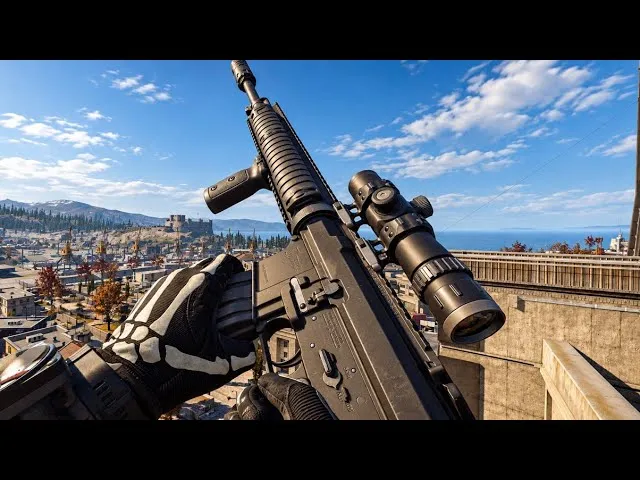
Video: CALL OF DUTY: WARZONE 30 KILL TACTICAL PS5 PRO GAMEPLAY! (NO COMMENTARY)
Need articles like this for your video? They help promote it on YouTube and Google — order them in the Telegram bot @sat_sit_bot. The bot writes and publishes the articles itself (with your YouTube video embedded) on popular topical websites (no ads). Your first 50 articles are free.
· based on the channel NoAnnoyingCommentary
Key takeaways
- Warzone is Call of Duty's free-to-play battle royale, built around loadouts, contracts and a shrinking gas circle.
- The NoAnnoyingCommentary upload shows a tactical 30-kill match recorded on PS5 Pro with no commentary track.
- A 30-kill Warzone match means roughly one elimination every 30-40 seconds across a 15-20 minute round.
- Tactical play in Warzone prioritizes cover, sound cues and zone control over constant sprinting and open-field duels.
- PS5 Pro hardware targets higher and steadier frame rates, which sharpens tracking during close-range fights.
Warzone is Call of Duty's free-to-play battle royale, where squads drop into a large map, loot weapons, complete contracts and fight until one player or team survives the closing gas circle. A tactical 30-kill match on PS5 Pro, like the one NoAnnoyingCommentary published on 13 October 2026, is the result of disciplined positioning, fast target switching and consistent movement rather than raw aggression alone.
The video itself is a no-commentary run: no narration, no reaction audio, just the match. That format works well for Warzone because the game's own audio — footsteps, reloads, parachutes, kill confirmations — carries most of the information a viewer needs. What follows is a practical breakdown of what a 30-kill tactical game actually requires, and how to build the same habits in your own matches.
What a 30 kill Warzone match actually demands
Thirty eliminations in a single Warzone round is a high ceiling, and the math explains why. A typical battle royale match runs 15 to 20 minutes from the first drop to the final circle, which means a 30-kill game averages roughly one kill every 30 to 40 seconds for the entire round. That pace only happens when three conditions line up: the player lands in a hot but survivable area, keeps re-engaging instead of hiding, and wins the majority of the fights they start.
Tactical play is what makes that pace sustainable. Instead of sprinting across open ground, a tactical player rotates along cover, holds power positions near the zone edge, and lets opponents walk into pre-aimed angles. The kill count comes from converting those advantages repeatedly, not from chasing every gunshot on the map.
Loadout and gunfight fundamentals
A high-kill Warzone game usually rests on a loadout that covers two ranges: one weapon for close-quarters building fights and one for mid-to-long sightlines. The standard structure looks like this:
- Primary slot: an assault rifle or LMG tuned for recoil control, used to hold lanes and punish rotations.
- Secondary slot: an SMG or shotgun with fast aim-down-sights speed for stairwells, doorways and rooftop pushes.
- Lethal and tactical: frags or semtex for forcing enemies out of cover, plus smoke or stuns to break sightlines.
- Perks: options that reduce explosive damage, speed up weapon handling or restore health faster after a fight.
- Field upgrade: a deployable that supports holding a position, such as a munitions box or a trophy system.
The tactical layer matters more than the exact attachments. Winning a Warzone gunfight usually comes down to who is already aiming at the corner when the other player appears, and who breaks the fight first when the trade is unfavorable.
Why the PS5 Pro version plays differently
PS5 Pro hardware targets higher and more stable frame rates at the resolutions Warzone players actually use, and that has a direct effect on gunfights. Smoother frame pacing means more consistent aim tracking during strafing duels, and faster load-in times mean less time waiting on textures after a respawn or a fresh drop.
For a no-commentary gameplay video, the hardware also changes how the match reads on screen. A stable frame rate keeps fast camera turns legible, so viewers can follow target acquisition and recoil control frame by frame instead of watching a blur. That is one reason channels like NoAnnoyingCommentary record on current-generation consoles: the footage doubles as a clean reference for movement and aim technique.
Movement, rotations and zone control
Tactical Warzone movement is about economy. Every sprint, slide and mantle should move you toward cover, a better angle or a rotation path — not just toward the nearest noise. Practical habits that show up in high-kill matches include:
- Rotating early along the edge of the gas instead of cutting through the middle of the map.
- Using vehicles only for long repositioning, then abandoning them before entering a contested area.
- Holding elevation when possible, because height converts into information about where enemies are moving.
- Resetting after every fight: reloading, plating up and checking the map before re-engaging.
- Listening for audio cues such as footsteps, zip lines and parachutes before committing to a push.
The result is a match where most fights are chosen rather than forced, which is exactly how a player reaches 30 kills without dying early to a random third party.
Common questions from Warzone players
Viewers of tactical Warzone gameplay tend to ask the same things: how the kill count is even possible, whether aggressive play is required, and whether console performance is a real factor. The honest answers come down to match selection and repetition. A 30-kill game is not a typical round — it is the upper end of what happens when a strong player lands well, finds fights early and keeps winning them.
Another recurring theme is whether no-commentary footage is useful for learning. It is, but only if you watch it actively: pause on engagements, note the angle the player holds before the kill, and look at where they rotate after the fight ends. Passive viewing of a highlight reel teaches far less than studying two or three full matches.
What to take from this Warzone run
A tactical 30-kill Warzone match on PS5 Pro is a demonstration of fundamentals stacked on top of each other: a loadout that covers both ranges, movement that always ends in cover, rotations that respect the gas, and the discipline to reset after every fight. The no-commentary format from NoAnnoyingCommentary strips away the noise and leaves the decisions visible, which makes it a useful reference whether you play on console or PC. Watch the rotations as closely as the kills — that is where the kill count is actually built.
Questions & answers
How is a 30 kill Warzone match even possible?
It requires a fast-paced round where the player lands in a contested area, wins most engagements and keeps re-engaging instead of hiding. Over a 15-20 minute match, that works out to roughly one elimination every 30-40 seconds, which only happens when rotations and positioning consistently create favorable fights.
Do you need to play aggressively to get high kill games in Warzone?
Not reckless aggression, but constant pressure helps. Tactical players hold power positions, rotate early along the gas edge and take fights on their own terms, which produces high kill counts without the deaths that come from sprinting into open ground.
Does the PS5 Pro version give a real advantage in Warzone?
It targets higher and steadier frame rates and faster load times, which makes aim tracking smoother during strafing duels and reduces waiting after drops. That is a comfort and consistency advantage rather than a guarantee of better results, since decision-making still decides most fights.
Is no-commentary Warzone gameplay useful for improving?
Yes, if you watch it actively. Pause on engagements, note the angle the player holds before firing, and track where they rotate after each fight. Studying full matches this way teaches more than passively watching highlight clips.
Source: CALL OF DUTY: WARZONE 30 KILL TACTICAL PS5 PRO GAMEPLAY! (NO COMMENTARY) · Markdown version